Monday, April 5, 2010

The Para-what? Olympics

Patriotism skyrockets whenever the Olympics come rolling around. We celebrate the winners and we wish the best until next time to the runner-ups and forgotten. Many people hold their compatriot competitors in high value, but it seems like there is one specific group that remains unrecognized.

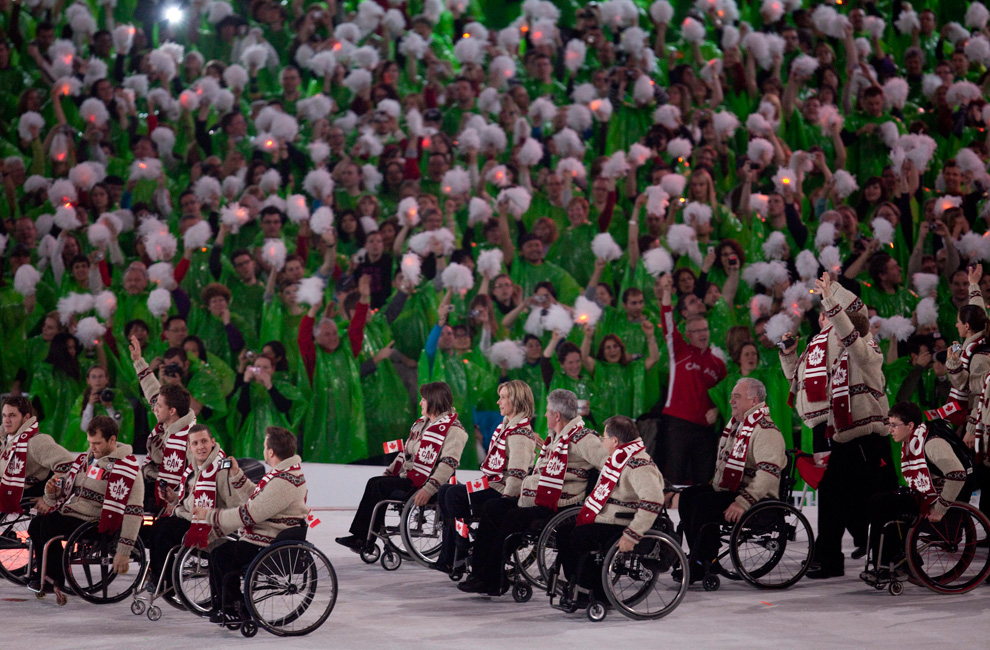
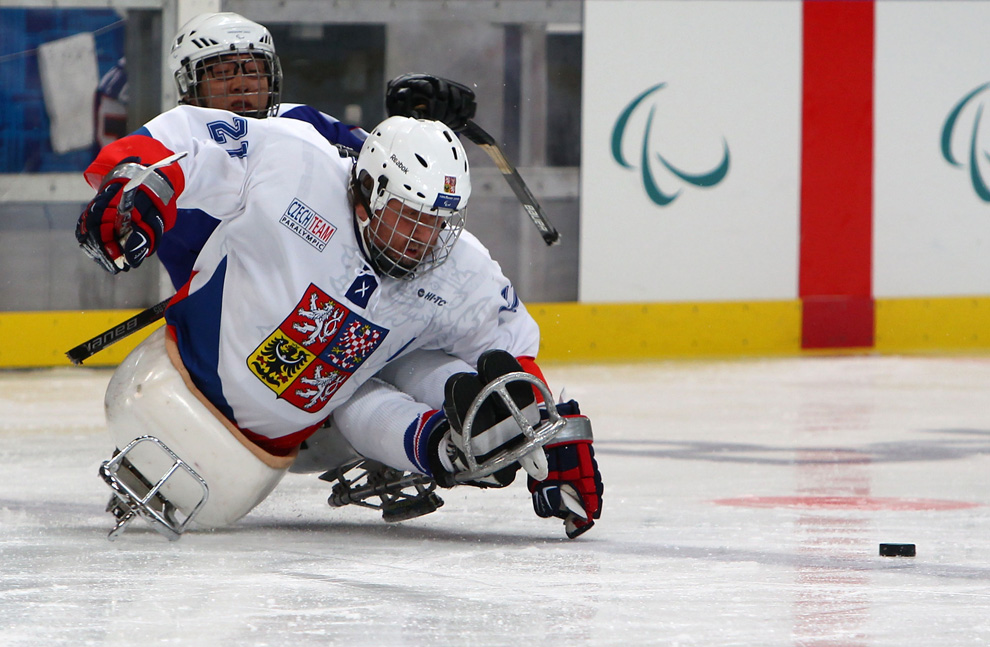
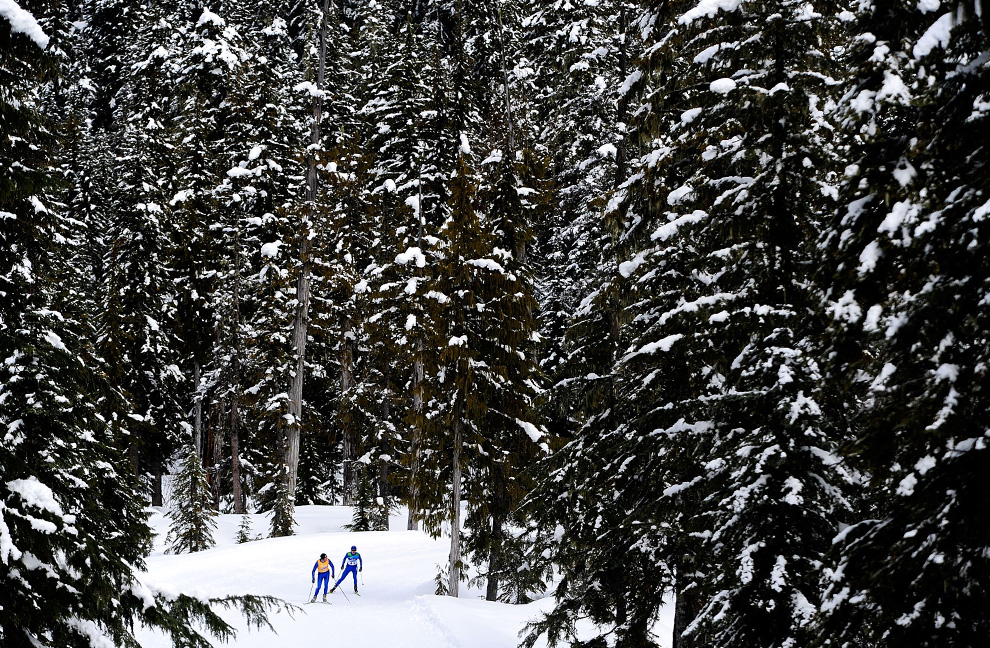
The 2010 Vancouver Winter Paralympics were held a few weeks after the regular 2010 Winter Olympics closing ceremony. From March 12 to March 21, numerous of courageous people went out to the snow overcoming any setback or disability. This year the Winter Paralympic Games held 64 events in 5 sports with 506 athletes representing 44 nations.

Paralympic Games athletes have either cerebral palsy, amputations, blindness, mobility issues, or any other physical restraints. Why such an inspiring event receives very little media coverage baffles me. As BBC Sport reports, "Despite the Canadian hosts enjoying a record-breaking Games, in many ways the Winter Paralympic party in Vancouver never really got going."

Hopefully for the next Paralympic Games more news outlets will take charge and decide to broadcast or feature it. Many of these people prove to contain such high sportsmanship and emit such positive energy and inspiration, and they try even harder than any regular person with a full functioning body. Every four years after the Olympic Games, the Paralympic Games are held and ran by International Paralympic Committee (IPC).

The images above are not mine. They belong to The Boston Big Picture and I encourage you to check out the rest of the pictures and read the descriptions, which can be found here. (http://www.boston.com/bigpicture/2010/03/2010_winter_paralympics.html)

Saturday, February 27, 2010

More Street Art: Aiko and Herakut

Tokyo native and founder of FAILE, Aiko incorporates Japan's Kawaii culture and American counter-culture art into her work.
I love her daring style and poster-like stencils. The clashing and collage look never fail for me.


---


Herakut is the duo of Hera and Akut.

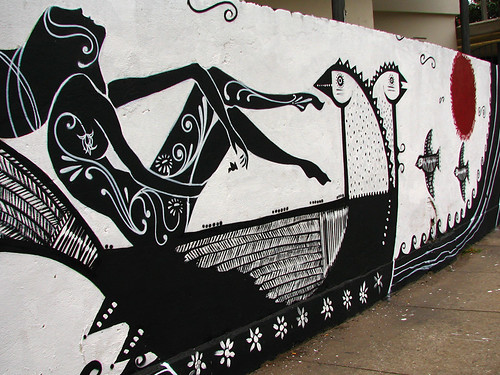
Street Art: Jana Joana, poetry via spraycans

I am absolutely in love with Jana Joana's style - very feminine, poetic, and dreamy.

I have never delved much into the world of street art and graffiti. In fact, I have felt partially against graffiti due to my limited exposure to it - often it being gang tagging or very crude and inappropriate for the setting.

Banksy is one of the few street artists who I really admire and enjoy his work, yet stumbling up Jana Joana I knew that the world of graffiti had more to offer than gang tagging.


Jana Joana has been working in Sao Paulo, Brazil since 1998.


"I like working on feminineness in my drawings and the sensitivity that every woman has, and I seek the valorization of women as singular productive and creative human beings in society," says Jana Joana.


Saturday, January 30, 2010

Conditioning and Schedules of Reinforcement

Different types of conditioning and using the movie Rain Man for examples.

Operant conditioning creates a thinking response.
examples:
  1. Charlie takes maple syrup to the diner each time for breakfast, or else Raymond would throw a fit.
  2. Charlie buys Raymond a portable television, so Raymond won't miss his shows.
Classical conditioning create an involuntary response.
examples:
  1. Raymond brushes his teeth a certain amount of times each morning.
  2. Raymond gets to watch TV after he does his routine.
Social conditioning is beginning to imitate what others around you do.examples:
  1. Charlie repeats things like an autistic person would. He learns this from Raymond from when they were kids. An example is when Charlie repeatedly says, "I got the rose bush!"
  2. Raymond tries to dance after seeing the people dance on TV.
  3. Raymond mimmicks Susana's moans.
  4. Raymond copies the motor sounds of the car on the bridge.
 Emotional conditioning associates something to an emotional response.
examples (not from Rain Man):
  1. Susie had a great time at Disneyland. When Susie thinks of Disney related things, she becomes happy.
Schedules of Reinforcement
fixed ratio: certainty of reward for a patter or behavior
  1. Each time the student studies, the student gets an A.
  2. Each time the player makes a goal, the student receives a high-five.
fixed interval: certainty of reward from a set amount of time.
  1. Every night at 6pm, he eats dinner.
  2. Every Friday night, she gets to go out.
variable ratio: uncertainty of reward for a behavior or pattern.
  1. She doesn't know how many times a week she had to do the dishes to get an allowance.
  2. The child's parents sometimes give him a cookie after he recites the ABCs.
variable interval: unknown amount of time for reward.
  1.  The fisherman doesn't know for how much time he has to wait until a fish comes along and takes the bait.

Peak Performers

... are on a mission.

... are masters of core competencies; give and take information.

... are masters of goal setting. They don't care about the reward, they work on things that they don't like if necessary in order to be better at what they're doing.

... commit to goals.

... treat failure as feedback.

... work collaboratively.

... maintain a network of friends, family, and colleagues.

... maintain a healthy lifestyle of exercise and nutrition.

... are not workaholics, they take  regular vacations.


... exceed cultural and physical limits.

... use mental imagery. They imagine the goal and struggle.

Sunday, January 17, 2010

New blog on child development and psychology!

I didn't want to spam out this blog with child psychology and development, so I thought it would be appropriate to start up a blog dedicated to research about children.

Visit High Hopes for the Zygote (http://www.highhopesforthezygote.blogspot.com)!

Thursday, January 7, 2010

Psychology: Development according to Erik Erikson

Why are some people more mistrustful of others? Why do some 50 year-olds still have self-identity issues? Why are 30 year-olds still compromising their values? Behaviorist Erik Erikson lays it out for us in these different stages of development. According to Erikson, if you did not pass the threshold of each stage at the given age, you will have a harder time transcending it later on.

Trust vs. Mistrus
t
0-18 months old
It is to no surprise that babies emit an alluring scent that attracts people to them. People who were bereft of the close care and attention of a parent during this critical age turn out to be mistrusting of other people throughout their life. They also feel uncomfortable to the touch of other people. Who would of thought? Love for your baby is the key to this stage.

Autonomy vs. Doubt 9-18 months old
I have seen it too many times; parents complaining about their one year old getting dirty and sticking things in their mouth. They keep their child in a nice, neat bubble in front of the television to prevent them from getting too close to all the germs and dirt out in the world.What the parents do not realize is that they are setting up their child to be afraid of exploring. Autonomy is all about discovering, whether it be smelling new aromas, touching different textures, or hearing different sounds.(Hence wooden blocks, play-dough, etc.) Kids who grow up without autonomy will less likely take risks and doubt will refrain them from doing what they want. Parents, let your child crawl.

Initiative vs. Guilt 18 months-3 years old
This is around the time when kids start getting cheeky and want to do things their way. As long as it is not extremely hazardous to them or others, let them make decisions. This is the start of their leadership skills. Often the ones who were always or mostly denied now have misplaced guilt with the decisions they make. It may not be harmful to others, but they will feel as so. The best advice one could give to a parent is listen to your child for their needs. Bend down at their level, look at them in the eyes, and consider their suggestions.

Industry vs. Inferiority 5-12 years old
Elementary school teachers are not dumb. There is a motive to each sticker or award they give. A child needs to feel successful, and also need to feel in control over their body (physical education, anyone?). They need feel accomplished in reading, writing, and with numbers - which are the core fundamentals for a successful life in this society. Usually they are more successful also with problem solving.

Identity vs. Confusion 13-18 years old
I think the title is quite explicit. These are the years when you start realizing that there may or may not be a Heaven or Hell, or even something like what type of genres you are getting into. These are more of the abstract years. You start gaining a sense of self and questioning what was taught to you.

Intimacy vs. Isolation 18-25 years old
You just cannot stop thinking about that one person. So how do we exercise intimacy? We find a nurturing partner, a business partner, and possibly a roommate all in one person. We have a physical and a mental relationship with that same person. And, of course, emotional.

Generosity vs. Stagnation 25-40 years old
Erikson believed these are the years that people seek positive impact, so they start trying to make a difference through volunteering or other altruism. They also tend to seek new challenges.

Integrity vs. Despair 40+ years old
Integrity is to do the right thing even when no one is watching, it is to not deliberately harm others or self. It is to be loyal and have respect for oneself and others. Despair is what the person who does not feel fulfilled feels during their death bed. They have a lot of regrets and wished they had probably trusted more, taken action, explored the "if"s, and wished they had been less self-absorptive.

They all end up accumulating into self-actualization.Of course, it would be silly to think that any of these could not happen at any age. Some people gain a sense of self earlier than others, while other may not ever really achieve it. Same applies to the other stages.