Tuesday, December 29, 2009

Psychology: On Perception

We see life through a window, and that window is our perception. As we age and gain new experiences and knowledge, our window opens more. We know that our perception gives us faulty images at times.We start off with


gestalt
: when the surroundings of an object fool our perception.

So, it's not just the object itself, but the pattern around it, both visual and conceptual.

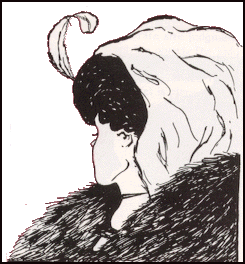
To the left is probably one of the most famous images of a gestalt. Take a closer look at it, what do you see? You should see two images. *You can view what it is at the end of the post.


similarity: associating new things with already experienced things and grouping objects because of closeness in size, shape, or other prominent geometrical characteristics.

For example, at first look at the image to the right, we group the larger circles together. Instead of seeing the small circles and a large one vertically, we just clump the horizontal line of large circles.


For this image to the left, our initial glance categorizes the dots in horizontal lines, even though all the dots are equidistant.


proximity: distance, both physically and conceptually. For the image to the left, we automatically see two columns because there is a large gap between them. So we put things that are closer together.

We all know our perception is not always correct. A way proximity proves this is by looking at the image below.
Which dot in the center is larger in size?


Our automatic response will want to say the dot in center on the left is larger. In fact, both centered dots are the same size. The proximity of the centered dot on the left to the smaller dots around it make it seem like it is bigger, whilst the centered dot on the right looks smaller due to the larger dots encompassing it.

closure: when your brain refrains from taking in new ideas and settles on one thing

A great movie that practices the use of different gestalts is Sling Blade. We watched it in my high school psych class and were assigned to find the different concepts of perception being used. Once you watch the movie this will make more sense. Closure happens when people automatically assume Karl is mentally deficient. Because of his poor social skills and symptoms of retardation, our brain automatically marks him as handicapped. Everything he does is perceived as something someone mentally ill would do. The similarity between him and Lenny from Of Mice and Men (someone who is actually mentally ill) makes it easier for the brain to close on him being handicap. There is plenty of more play with gestalt in the movie.

*The image is both of an old lady's face and a young lady turning her face to the right.

Wednesday, December 23, 2009

The 6 Different Perspectives


Nurture


Social cultural


Behavioral

The things
we learn are due to positive and negative reinforcement. For example, I score a 100% on a quiz, so I receive a prize. The positive reinforcement is the prize. I fail the class, so I have to take it all over again. Having to retake the course is the negative reinforcement.

Humanistic

Humanists believe that humans have the desire to be better. Like, if a culprit witnesses an old lady being robbed, humanists believe that he will help her.


Nature

Psychoanalysis
The
father of psychoanalysis is Sigmund Freud. He believed there to be the conscious and the unconscious in the human mind. The conscious consists of the Ego, Id, and Super-ego. The Id is our basic instincts of survival (Eros) and death (Thanatos). The Ego according to Freud "that part of the id which has been modified by the direct influence of the external world ... The ego represents what may be called reason and common sense, in contrast to the id, which contains the passions ... in its relation to the id it is like a man on horseback, who has to hold in check the superior strength of the horse; with this difference, that the rider tries to do so with his own strength, while the ego uses borrowed forces (Freud, The Ego and the Id)." The Super-ego is supposed to counteract what the Id does. The Id wants us to have sex with multiple partners, but the Super-ego reminds the person to act socially accepted.

Freud also believed that the purpose to everything we do is to reproduce. Just bought a new car? Well, unconsciously it's to get a step close to marry someone. Kind of like a male peacock showing of its vivid feathers.

Then along came Carl Gustav Jung. See my older posts on his views of dreams and I suggest reading up on the collective unconscious.

Bio-psychological
They basically believe that "
bodily experiences, therefore, and more particularly brain-experiences, must take a place amongst those conditions of the mental life of which Psychology need take account. The spiritualist and the associationist must both be 'cerebralists,' to the extent at least of admitting that certain peculiarities in the way of working of their own favorite principles are explicable only by the fact that the brain laws are a codeterminant of their result. Our first conclusion, then, is that a certain amount of brain-physiology must be presupposed or included in Psychology."

Cognitive
This theory is that everything we learn and how we perceive the world is through hardwiring our brain.

Axon ---> Dentride


As you can probably tell, my favorite of these is psychoanalysis, also known as psychodynamics. I will post more about each perspective (or the ones I know about) in future psychology posts.


Murray's List of Psychological Needs

Murray thinks we need these in order to not suffer from neurosis.
I feel like agreeing with most of them, even if some seem a bit... out there. Some do need to be practiced in small dosages as they might hurt others, but they are still vital to one's needs so they must not be left in the dark. My quotidian example of each will be parenthesized.

acquisition
to gain possessions and property
(Books. I love buying books.)

conservation to collect, repair, clean, and preserve things
(I like to take care keep good care of my possessions.)

order to arrange, organize, put away objects
(While I may seem messy, there is a certain organization to my things. I like having my clothes by color, books with most sentimental value higher on a shelf, etc.)

construction to organize and build
(I love making things for other people. Whether it be a juvenile painting, a mix-cd, or anything crafty.)

achievement to overcome obstacles, to exercise power, to strive to do something difficult, as well as quickly as possible
(I get good grades.)

recognition to excite praise and commendation
(I receive academic excellence awards.)

defendance to defend oneself against blame or belittlement
(Do this with my mom. q: )

dominance to influence or control others
(President of Key Club/Youth Ambassadors, Treasurer of SVC, editor of The Breeze, etc etc.)

autonomy to resist influence or coercion
( AKA I lay out my rules to my mom.)

aggression  to assault or injure
(Playful jokes with friends, "Slug Bug" game, etc.)

affiliation to form friendships and associations
(Strong bond with a few people, network of friends from clubs and organizations, etc.)

rejection to snub, ignore, or exclude
(No, thanks.)

nurture to nourish, aid, or protect
(Four nephews, one niece, been an aunt since I was ten. I love helping others.)

succorance to seek aid, protection, or sympathy
(Do this often enough.)

play to relax, amuse oneself, seek diversion, and entertainment
(Learning the harmonica, drawing, painting, being silly, etc.)

cognizance to explore
(Reading, people watching, going places, etc.)

Sunday, December 20, 2009

More on the Jungian Psychology of Dreams

Carl Jung believed there to be two types of dreams: little dreams and big dreams.

Little dreams
Little dreams are dreams about daily problems or things. Such as, if you are in a fight with your boyfriend/girlfriend, you might have a dream about them moving away or you two in a big fight. Chances are if you can figure out your dream right away, it's a little a dream.


Big dreams
Big dreams are the unconscious mind trying to send a message or messages to the conscious mind. These dreams consist of archetypes or motifs. They remind us of our psychological needs, and remind us to pay attention to them. Jung also believed that modern Western culture suffers from unhappiness much more because we don't pay enough attention to our dreams. Thus, we don't meet our psychological needs.


A very small list of archetypes:
  • Reptiles symbolize aide, medicine, or helping others/self (see American Medical Association logo).
  • Ladders represent ascending to something greater (see Jacob's Ladder).
  • Male faceless person means your masculine side is trying to talk to you.
  •  Female faceless person means that you need to be more in touch with your femininity.
  •  Caves elucidate living blindly (read The Allegory of the Cave by Plato).
  •  Someone you love dying isn't them actually them dying. It's an old part of you shedding.

  • Unbalanced star symbolizes unbalanced life, or unbalanced gender roles.

Cognitive Psychology: Dreams

A few weeks ago I posted about the Jungian perspective of dreams. Today I will talk about the cognitive psychology of dreams and what happens while you are sleeping. We all know that we dream every night, no matter if you remember your dreams or not.

Here is the sleep cycle:


REM is Rapid Eye Movement and most of our vivid dreams happen during this stage of sleep.

In the image above, Stage 3 and 4 briefly mention delta waves. In these stages, your brain is getting rest, whereas in the alpha stages it's your body being rested.

Beta is when we're awake.


The three cognitive theories of why we dream:

  1. Filtering
    This explains why other animals have a better memory compared to ours. Our brain trashes everything we don't need, which is why we can't remember what underwear we wore last Monday. Basically, it prunes the unessential.
  2. Problem Solving
    Has anyone ever told you to just sleep on a problem? They were not too far off from the truth. While you are sleeping your brain is doing its job of problem solving. That explains the epiphanies in your morning shower. The unconscious mind picks up things beyond our perception, so while you are sleeping, it's putting things together. Instead of racking your brain on a problem, just think about it for a while before sleeping and then have a good night's rest.
  3. Processing
    The third theory is that your brain is processing information from the day. It's organizing and filing all the information that was not filtered out.

Tuesday, December 8, 2009

Jungian Psychology: A Closer Look at Dreams

After reading this article, I have completely indulged myself in Carl Jung. The images below are thumbnailed, so go ahead and click on it for full sized view. I promise it's an exceptional article, or else I would have not felt compelled to share it with you.

1.Photobucket 2.Photobucket
3.Photobucket 4.Photobucket
5.Photobucket 6.Photobucket
7.Photobucket

Sunday, December 6, 2009

Books, books, books.


A Course in Miracles
by Helen Schucman

Unfortunately I started this book with a distaste for Christianity and was put off by the mentioning of God. It has some interesting lessons and I do plan on rereading this book in the future with a more open mind.

I can harbor respect for this book, but it just was not what I had in mind. It's recommendable but only to those who will not stick to their presupposition of what Christianity is.


The Scarlet Letter
by Nathaniel Hawthorne


I read The Scarlet Letter in my junior American Literature class in high school. While many of the other students disliked the book for its complex sentences and advanced syntax and Puritan diction, I found myself very fond of this Nathaniel Hawthorne novel.

Hester Prynne is the super woman of Puritan Boston. She is the epitome of what most Calvinist women lacked: courage, freethought, independence, and deep reevaluation of morals and values.

A lot of the other students also found themselves overwhelmed by the amount of symbolism, themes, and motifs in the novel. Personally, I think that is what really shapes the story and makes this Hawthorne's "magnum opus." The copious amount of symbolism is what makes this book unique.

Overall, it is a great book and I am glad I was introduced to it. I highly recommend it. Themes it explores are society vs nature, human condition, and self vs society.


The Catcher in the Rye
by J.D. Salinger

A very well written book that is either underestimated or over appreciated for the wrong reasons. We follow the "plot" by the first person narration of Holden Caulfield, who goes through extreme existentialism with a hint of misanthropy, often mistaken for teenage angst (or are they mutual?), and ends up in an asylum.

It is not one of my top books, but it is definitely a book I really like. I find myself being able to relate in some aspects to Holden from past ideologies and experiences. The main problem that Holden comes across is his fixation on preserving innocence. That is where we no longer relate. He tries to be that "catcher in rye" and we don't exactly find out if his perception on that changes by the end of book. (Correct me if I am wrong.)

I find it almost ironic that schools ban this book because of the explicit language. They are trying to bubble-wrap their students and preserve their innocence, just like Holden tries to do so with his sister. If only Holden knew the amount of kids he is corrupting...

Friday, November 27, 2009

A day of giving grace.

As my fellow Americans know, yesterday was Thanksgiving - a day to give thanks for everything that we have. For this post I was going to go into the hypocrisy found in this holiday, but I will keep my reserve.

Instead, I am going to thank all of you for reading my thoughts and staying interested. I want to give thanks to everyone who is doing their part in making this world a better place, a thanks to those battling against negative stereotypes, those who are tearing down the walls of prejudice, and so on so forth. I am thankful for the people in my life constantly. I try to keep them aware of my love for them. I am thankful for the person who I am in love with, I am thankful for the people who challenge me, I am thankful.

I'm not sure what I want the direction of this post to be, but before it gets any cheesier, I think I'll stop. I hope everyone has not only a fantastic holiday, but a wonderful life.


-Gabriela

Thursday, November 5, 2009

Remember, remember the Fifth of November

The Gunpowder Treason and Plot
I know of no reason
Why the Gunpowder Treason
Should ever be forgot.


Let us not only dedicate this day but each day as a remembrance of those who exercise their voice - from 1605 to 2009, from London to Gaza, and all around the time spectrum and globe. And let us not only leave it as a remembrance but a reminder that we, too, have a voice.


Sunday, October 25, 2009

I AM NOT A SEX OBJECT

I'm tired of seeing advertisements everywhere objectifying women as sex objects. No, if you buy Axe cologne women won't swarm all over you lavishing your scent. And you eating that double cheeseburger from Carl's Jr. will definitely not get you a one night stand with a super model. Why am I seeing almost naked women in the cover of Sports Illustrated? What does her exposing everything but her nipples have to do with sports?

There is an unnecessary pressure being built on females from a young age to fit 'the image'. Girls are beginning to feel inadequate and "unsexy" at a younger age now than before
.
Yep, you guessed it. Wearing D&G won't get you hot, steamy sex. That leads me to my next question: What are they trying to sell? Are they trying to sell sex? the image of women? or... their clothing?
Because now you totally want to buy one their subs.

I'm not saying males don't get pressure from our current culture either. With such things as Viagra, men are expected to last longer in bed. Don't you think your grandparents should stop having sex already?

The book I recommend for better understanding of the female development and how they are being "girl poisoned" read Reviving Ophelia by Mary Pipher. For better understanding of boys and the emotional straitjackets they are being forced into read Real Boys by William Pollack.

Sunday, September 6, 2009


Look again at that dot. That's here. That's home. That's us. On it everyone you love, everyone you know, everyone you ever heard of, every human being who ever was, lived out their lives. The aggregate of our joy and suffering, thousands of confident religions, ideologies, and economic doctrines, every hunter and forager, every hero and coward, every creator and destroyer of civilization, every king and peasant, every young couple in love, every mother and father, hopeful child, inventor and explorer, every teacher of morals, every corrupt politician, every "superstar," every "supreme leader," every saint and sinner in the history of our species lived there – on a mote of dust suspended in a sunbeam.

The Earth is a very small stage in a vast cosmic arena. Think of the rivers of blood spilled by all those generals and emperors so that, in glory and triumph, they could become the momentary masters of a fraction of a dot. Think of the endless cruelties visited by the inhabitants of one corner of this pixel on the scarcely distinguishable inhabitants of some other corner, how frequent their misunderstandings, how eager they are to kill one another, how fervent their hatreds.

Our posturings, our imagined self-importance, the delusion that we have some privileged position in the Universe, are challenged by this point of pale light. Our planet is a lonely speck in the great enveloping cosmic dark. In our obscurity, in all this vastness, there is no hint that help will come from elsewhere to save us from ourselves.

The Earth is the only world known so far to harbor life. There is nowhere else, at least in the near future, to which our species could migrate. Visit, yes. Settle, not yet. Like it or not, for the moment the Earth is where we make our stand.

It has been said that astronomy is a humbling and character-building experience. There is perhaps no better demonstration of the folly of human conceits than this distant image of our tiny world. To me, it underscores our responsibility to deal more kindly with one another, and to preserve and cherish the pale blue dot, the only home we've ever known.

Thursday, August 27, 2009

Please.

Please help find this artist by the name of Deca Caszm. The story and a song is in the following url:

http://www.cxcr6.com/whereisdecacaszm

Wednesday, August 5, 2009

Home

NP: Mice Parade - Satchelaise


"We tried to make our conversation seem like more than an interview."


Saturday, July 11, 2009

Tuesday, June 16, 2009

Monday, June 15, 2009

Dates, historic figures, and revolutions...

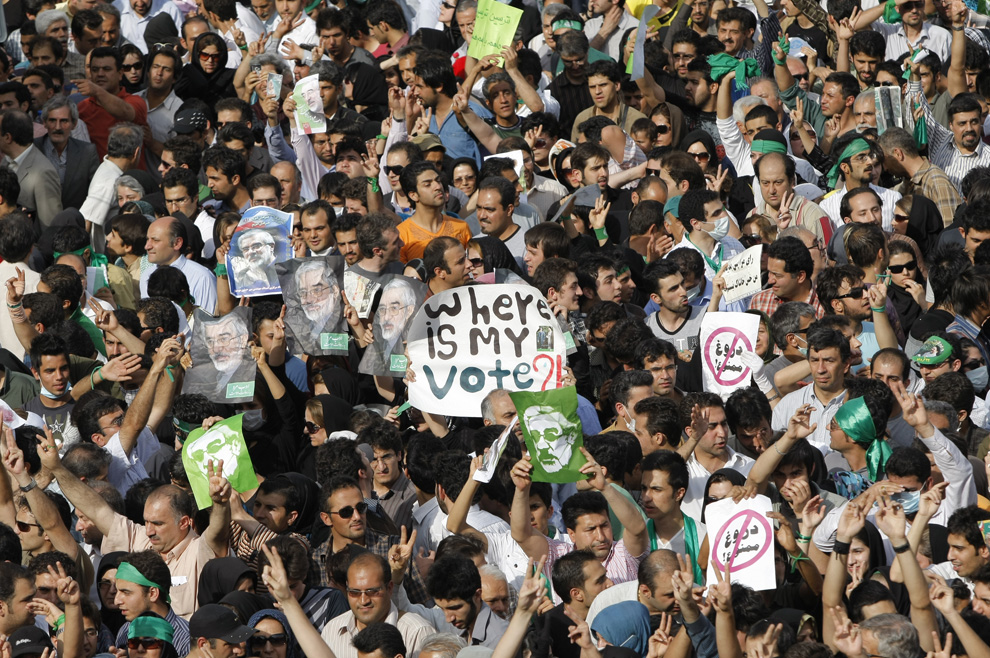
Dates, historic figures, and revolutions are a part of what history encompasses. History continues to take its place, but when does one have the opportunity to live in a time where people still fight opposition?


Iranian supporters of reformist, Mir Hossein Mousavi, disturbed by the potential voting fraud, decided to flourish their once muted voice through peaceful and violent riots.

The protests are taking place in the larger cities of Iran. The picture above, set in Tehran, depicts one of the peaceful protests. Aside from the absence of violence, the discomfort is evident in some of their expressions.

It may not be a revolution itself, but these are changing moments. Patriarchal Iran does not equate women the same rights, so it is a revolutionary movement to see women fight back for a fellow civilian.

For a bigger view of the images click them or visit:
http://www.boston.com/bigpicture/2009/06/irans_disputed_election.html

Saturday, April 11, 2009

Cyberbullying

NP: Wire - Low Done

A thread about music elitists bashing others for their music taste made me think of how anonymity encourages people to be rude to others. People say really offensive things they would not tell anyone else in real life.

Does anyone else have anything to aggregate onto this? Do you think this problem is chronic and affecting the youth (and adults?) of today? A solution to it?

http://www.usatoday.com/news/nation/2008-05-15-myspace-suicide_N.htm
That's an example of the causes of cyberbullying.

I was talking about this with a friend and he made very valid points.

We're in an age where internet is actually serious business. People do their banking on the internet, fall in love on the internet, order prescription drugs on the internet, etc.

How is a rude act dismissed just because it was made online?

Sunday, March 29, 2009

Do be do be do

"I'm okay with being unimpressive; I sleep better." -Garden State A week ago I finished reading Deadeye Dick by Vonnegut. The main character is what he dubs himself, a "neuter" - one who is neutral with the world, is neither homosexual or heterosexual, is not impressive (and is okay with it). In the book, they usually excel at a certain trait or subject but are mediocre at the rest. Usually outcasts, misfits, weirdos, creeps etc.

"To be is to do" - Socrates
"To do is to be" - Jean-Paul Sartre
"Do be do be do" - Frank Sinatra

So anyway, I wonder how many people consider themselves a neuter. After finishing the book I wondered if I'd fall under the term. I came to the conclusion that I am antisocial and do not mind being unimpressive. However, I don't think the sexual definition applies to me and I don't excel in anything in particular.

So taking the definition of a neuter into a broader sense and stretching it to someone who is antisocial, how many of you consider yourselves antisocial?

I have problems some times communicating with strangers. I find myself at times easily intimidated because of either age, knowledge in whatever, trivial things, etc. At times though I feel an energetic connection with a complete stranger and just talk to them.


Most of the time, though, I just don't feel compelled to talk to anyone. I'm not hostile towards anyone either. I'm sort of apathetic towards individual people that just don't strike me appealing.

I'm not sure what my original point in the post was supposed to be, or if there was one... So I'll just end it with recommending Deadeye Dick. Oh, and the Socrates, Sartre, and Sinatra thing is in the book. You'll understand it when you read it. (o:

Tuesday, March 17, 2009

Alan Watts - Music and Life

NP: Air - Le Soleil est Pres de Moi
I've been neglecting for far too long...so I've returned with another video. Sorry for the lack from my part. I guess this is a good time to show good videos!


Friday, February 27, 2009

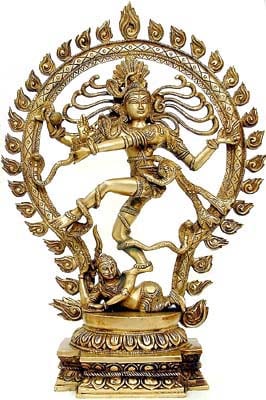
Shiva, Hindu deity, god of fertility and destruction

NP: Morrissey - Years of Refusal album

O'er yonder
at prison [school in society's acceptable taxonomy] I dug my nose into my dusty history book (it really was not dusty, I *have* to use it everyday) and began reading on Hindu deities.
I especially found Shiva, god of fertility and destruction interesting. I was going to write a description/summary of him, but found this really great one online in the midst of searching images of said.

Shiva as NatarajaShiva the Hindu god of destruction is also known as Nataraja, the Lord of Dancers (In Sanskrit Nata means dance and raja means Lord). The visual image of Nataraja achieved canonical form in the bronzes cast under the Chola dynasty in the tenth century AD, and then continued to be reproduced in metal, stone and other substances right up to the present times. The Chola Nataraja is often said to be the supreme statement of Hindu art.

To understand the concept of Nataraja we have to understand the idea of dance itself. Like yoga, dance induces trance, ecstasy and the experience of the divine. In India consequently, dance has flourished side by side with the terrific austerities of the meditation grove (fasting, absolute introversion etc.). Shiva, therefore, the arch-yogi of the gods, is necessarily also the master of the dance.


These iconographic details of Nataraja are to be read, according to the Hindu tradition, in terms of a complex pictorial allegory:

Nataraja

The most common figures depict a four-armed Shiva. These multiple arms represent the four cardinal directions. Each hand either holds an object or makes a specific mudra (gesture).

The upper right hand holds a hour-glass drum which is a symbol of creation. It is beating the pulse of the universe. The drum also provides the music that accompanies Shiva’s dance. It represents sound as the first element in an unfolding universe, for sound is the first and most pervasive of the elements. The story goes that when Shiva granted the boon of wisdom to the ignorant Panini (the great Sanskrit grammarian), the sound of the drum encapsulated the whole of Sanskrit grammar. The first verse of Panini’s grammar is in fact called Shiva sutra.

The hour-glass drum also represents the male and female vital principles; two triangles penetrate each other to form a hexagon. When they part, the universe also dissolves.

Nataraja King of Dancers

The opposite hand, the upper left, bears on its palm a tongue of flames. Fire is the element of destruction of the world. According to Hindu mythology at the end of the world, it will be fire that will be the instrument of annihilation. Thus in the balance of these two hands is illustrated a counterpoise of creation and destruction. Sound against flames, ceaselessness of production against an insatiate appetite of extermination.

The second right hand is held in the abhaya pose (literally without fear) and so a gesture of protection, as an open palm is most likely to be interpreted. It depicts the god as a protector.

Batik Paintings of Lord ShivaThe left leg is raised towards the right leg and reaches across it; the lower left hand is stretched across the body and points to the upraised left foot which represents release from the cycle of birth and death. Interestingly, the hand pointing to the uplifted foot is held in a pose imitative of the outstretched trunk of an elephant. In Sanskrit this is known as the ’gaja-hasta-mudra’ (the posture of the elephant trunk), and is symbolic of Ganesha, Shiva’s son, the Remover of obstacles.

Shiva dances on the body of a dwarf apasmara-purusha (the man of forgetfulness) who embodies indifference, ignorance and laziness. Creation, indeed all creative energy is possible only when the weight of inertia (the tamasic darkness of the universe) is overcome and suppressed. The Nataraja image thus addresses each individual to overcome complacency and get his or her own act together.

The ring of fire and light, which circumscribes the entire image, identifies the field of the dance with the entire universe. The lotus pedestal on which the image rests locates this universe in the heart or consciousness of each person.

The Nataraja image is also eloquent of the paradox of Eternity and Time. It shows us that the reposeful ocean and the racing stream are not finally distinct. This wonderful lesson can be read in the significant contrast of the incessant, triumphant motion of the swaying limbs to the balance of the and the immobility of the mask-like countenance. Shiva is Kala, meaning time, but he is also Maha Kala, meaning “Great Time” or eternity. As Nataraja, King of dancers, his gestures, wild and full of grace, precipitate the cosmic illusion; his flying arms and legs and the swaying of his torso produce the continuous creation-destruction of the universe, death exactly balancing Natarajabirth. The choreography is the whirligig of time. History and its ruins, the explosion of suns, are flashes from the tireless swinging sequence of the gestures. In the beautiful cast metal figurines, not merely a single phase or movement, but the entirety of this cosmic dance is miraculously rendered. The cyclic rhythm, flowing on and on in the unstayable, irreversible round of the Mahayugas, or Great Eons, is marked by the beating and stamping of the Master’s heels. But the face remains, meanwhile in sovereign calm.

The Nataraja image represents not simply some event in the mythic life of a local deity but a universal view in which the forces of nature and the aspirations and limitation of man confront each other and are blended together. The curator of the Indian collection of the Metropolitan Museum of Art has rightly written that: "If one had to select a single icon to represent the extraordinarily rich and complex cultural heritage of India, the Shiva Nataraja might well be the most remunerative candidate."

Full article: http://www.exoticindiaart.com/article/nataraja/


Thursday, February 5, 2009

Line between humanity and inhumanity?

NP: King Crimson - Cat Food

Observe the pictures and see how they collide or relate to the one above or below it.


And another nice blog I found...
CEOs make 50k per hour