Why are some people more mistrustful of others? Why do some 50 year-olds still have self-identity issues? Why are 30 year-olds still compromising their values? Behaviorist Erik Erikson lays it out for us in these different stages of development. According to Erikson, if you did not pass the threshold of each stage at the given age, you will have a harder time transcending it later on.
Trust vs. Mistrust 0-18 months old
It is to no surprise that babies emit an alluring scent that attracts people to them. People who were bereft of the close care and attention of a parent during this critical age turn out to be mistrusting of other people throughout their life. They also feel uncomfortable to the touch of other people. Who would of thought? Love for your baby is the key to this stage.
Autonomy vs. Doubt 9-18 months old
I have seen it too many times; parents complaining about their one year old getting dirty and sticking things in their mouth. They keep their child in a nice, neat bubble in front of the television to prevent them from getting too close to all the germs and dirt out in the world.What the parents do not realize is that they are setting up their child to be afraid of exploring. Autonomy is all about discovering, whether it be smelling new aromas, touching different textures, or hearing different sounds.(Hence wooden blocks, play-dough, etc.) Kids who grow up without autonomy will less likely take risks and doubt will refrain them from doing what they want. Parents, let your child crawl.
Initiative vs. Guilt 18 months-3 years old
This is around the time when kids start getting cheeky and want to do things their way. As long as it is not extremely hazardous to them or others, let them make decisions. This is the start of their leadership skills. Often the ones who were always or mostly denied now have misplaced guilt with the decisions they make. It may not be harmful to others, but they will feel as so. The best advice one could give to a parent is listen to your child for their needs. Bend down at their level, look at them in the eyes, and consider their suggestions.
Industry vs. Inferiority 5-12 years old
Elementary school teachers are not dumb. There is a motive to each sticker or award they give. A child needs to feel successful, and also need to feel in control over their body (physical education, anyone?). They need feel accomplished in reading, writing, and with numbers - which are the core fundamentals for a successful life in this society. Usually they are more successful also with problem solving.
Identity vs. Confusion 13-18 years old
I think the title is quite explicit. These are the years when you start realizing that there may or may not be a Heaven or Hell, or even something like what type of genres you are getting into. These are more of the abstract years. You start gaining a sense of self and questioning what was taught to you.
Intimacy vs. Isolation 18-25 years old
You just cannot stop thinking about that one person. So how do we exercise intimacy? We find a nurturing partner, a business partner, and possibly a roommate all in one person. We have a physical and a mental relationship with that same person. And, of course, emotional.
Generosity vs. Stagnation 25-40 years old
Erikson believed these are the years that people seek positive impact, so they start trying to make a difference through volunteering or other altruism. They also tend to seek new challenges.
Integrity vs. Despair 40+ years old
Integrity is to do the right thing even when no one is watching, it is to not deliberately harm others or self. It is to be loyal and have respect for oneself and others. Despair is what the person who does not feel fulfilled feels during their death bed. They have a lot of regrets and wished they had probably trusted more, taken action, explored the "if"s, and wished they had been less self-absorptive.
They all end up accumulating into self-actualization.Of course, it would be silly to think that any of these could not happen at any age. Some people gain a sense of self earlier than others, while other may not ever really achieve it. Same applies to the other stages.





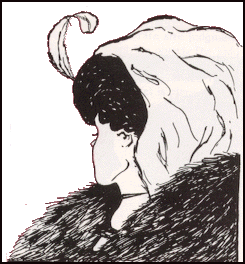
 similarity: associating new things with already experienced things and grouping objects because of closeness in size, shape, or other prominent geometrical characteristics.


