At least a little bit.
You might have heard of the Myers-Briggs personality type indicator. It is mostly based on Carl Jung's (dream guy/psychoanalyst) findings. You can take the test http://www.mypersonality.info/ there.
Once you have done so, or you already know what personality type you are, I have scanned some papers provided by my psych teacher for some more information.
http://www.box.net/shared/fxneej5jry
http://www.box.net/shared/ppge9xvobj
^These PDFs briefly break down what each thing means, and what they prefer.
http://www.box.net/shared/qya07qxkza
^"Mutual Usefulness of the Opposites"
Basically, what the opposite personality type seeks from you and what you seek from there.
http://www.box.net/shared/4al2otfia0
^Management/Leadership types
This test is in no way supposed to limit you in any way. I am an INTP, and do not only behave in the way that characterizes an INTP. In fact, I have used these results to further develop my extroverted side.
Sunday, May 9, 2010

Monday, April 26, 2010
Dreams, yet again
Perhaps I've already stressed enough the importance of dreams, but here is an article by the BBC for the interested.
http://news.bbc.co.uk/2/hi/health/8638551.stm
It doesn't add on much from what I have already shared.
http://news.bbc.co.uk/2/hi/health/8638551.stm
It doesn't add on much from what I have already shared.
Monday, April 5, 2010
The Para-what? Olympics
Patriotism skyrockets whenever the Olympics come rolling around. We celebrate the winners and we wish the best until next time to the runner-ups and forgotten. Many people hold their compatriot competitors in high value, but it seems like there is one specific group that remains unrecognized.
The 2010 Vancouver Winter Paralympics were held a few weeks after the regular 2010 Winter Olympics closing ceremony. From March 12 to March 21, numerous of courageous people went out to the snow overcoming any setback or disability. This year the Winter Paralympic Games held 64 events in 5 sports with 506 athletes representing 44 nations.
Paralympic Games athletes have either cerebral palsy, amputations, blindness, mobility issues, or any other physical restraints. Why such an inspiring event receives very little media coverage baffles me. As BBC Sport reports, "Despite the Canadian hosts enjoying a record-breaking Games, in many ways the Winter Paralympic party in Vancouver never really got going."
Hopefully for the next Paralympic Games more news outlets will take charge and decide to broadcast or feature it. Many of these people prove to contain such high sportsmanship and emit such positive energy and inspiration, and they try even harder than any regular person with a full functioning body. Every four years after the Olympic Games, the Paralympic Games are held and ran by International Paralympic Committee (IPC).
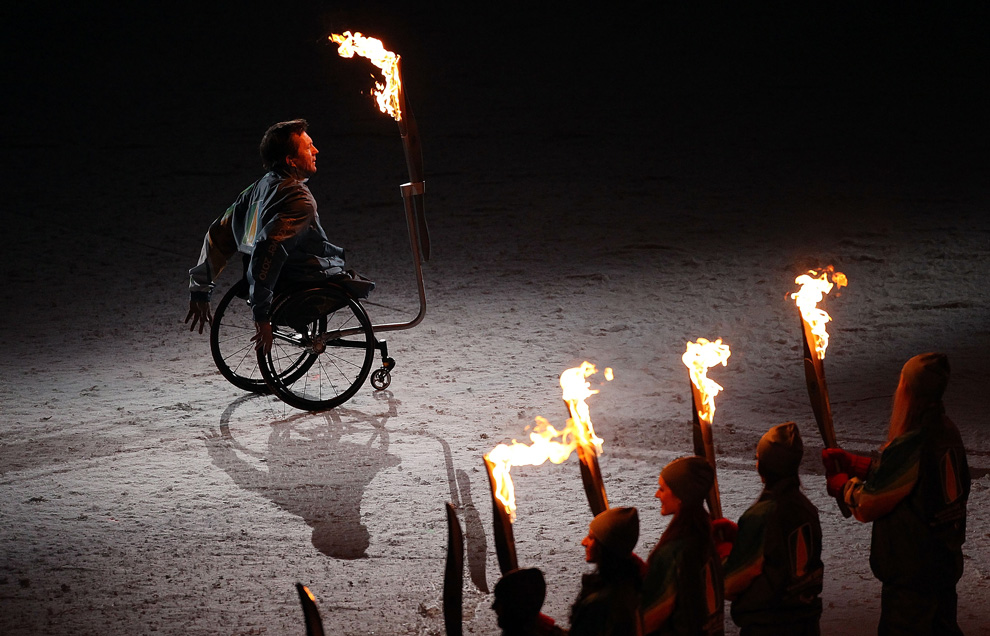
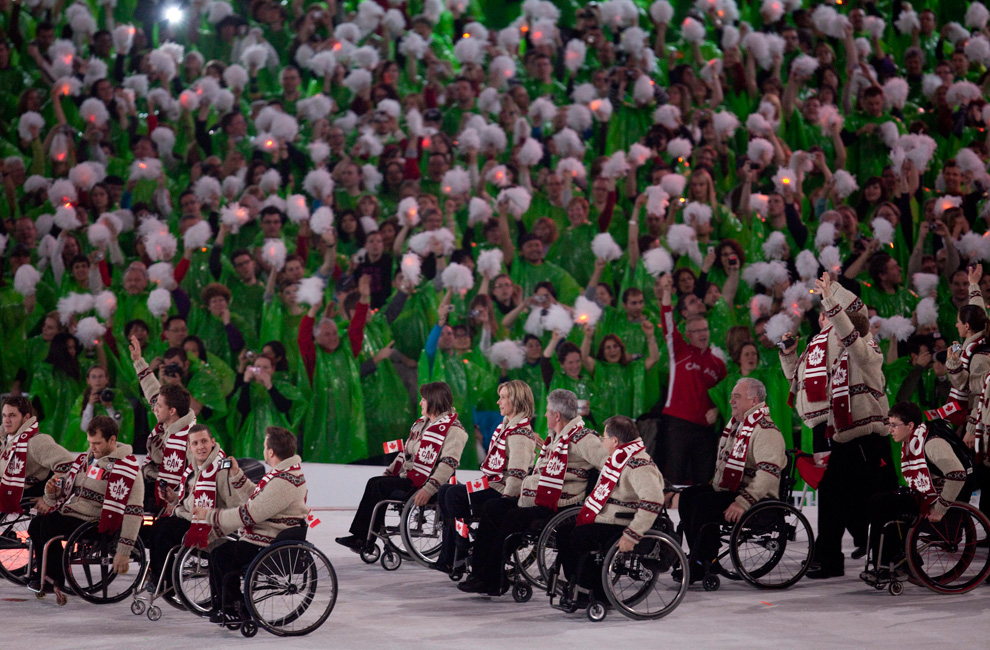
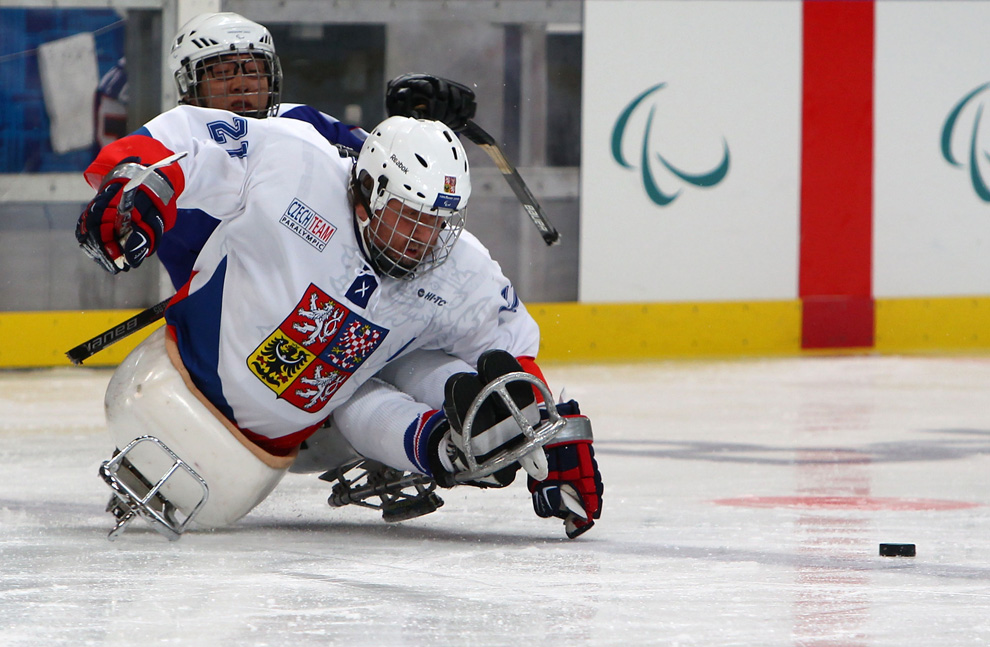
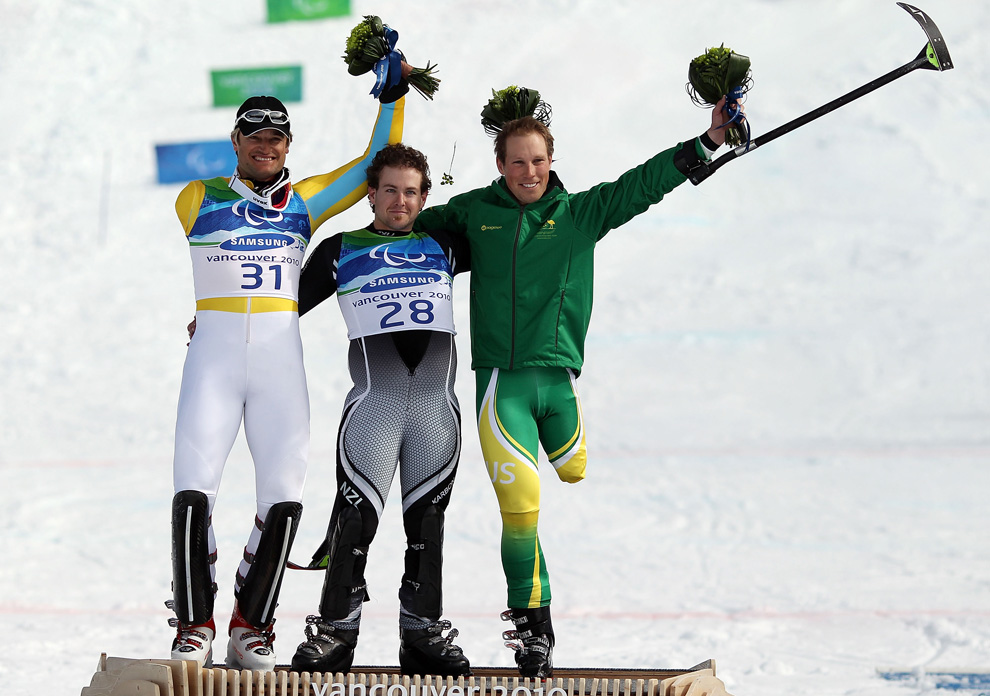
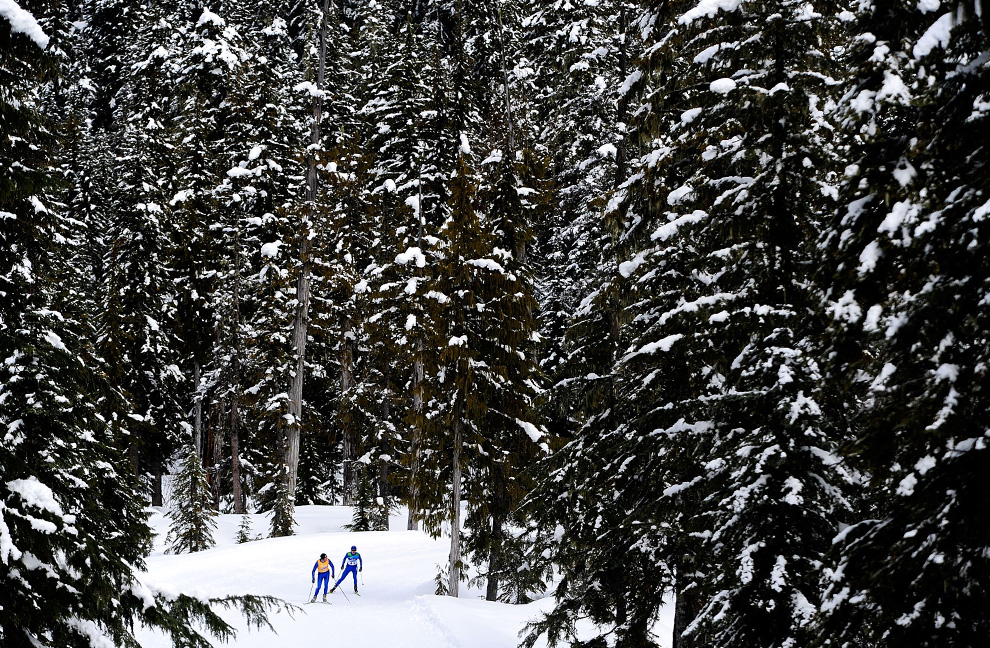 The images above are not mine. They belong to The Boston Big Picture and I encourage you to check out the rest of the pictures and read the descriptions, which can be found here. (http://www.boston.com/bigpicture/2010/03/2010_winter_paralympics.html)
The 2010 Vancouver Winter Paralympics were held a few weeks after the regular 2010 Winter Olympics closing ceremony. From March 12 to March 21, numerous of courageous people went out to the snow overcoming any setback or disability. This year the Winter Paralympic Games held 64 events in 5 sports with 506 athletes representing 44 nations.
Paralympic Games athletes have either cerebral palsy, amputations, blindness, mobility issues, or any other physical restraints. Why such an inspiring event receives very little media coverage baffles me. As BBC Sport reports, "Despite the Canadian hosts enjoying a record-breaking Games, in many ways the Winter Paralympic party in Vancouver never really got going."
Hopefully for the next Paralympic Games more news outlets will take charge and decide to broadcast or feature it. Many of these people prove to contain such high sportsmanship and emit such positive energy and inspiration, and they try even harder than any regular person with a full functioning body. Every four years after the Olympic Games, the Paralympic Games are held and ran by International Paralympic Committee (IPC).
The images above are not mine. They belong to The Boston Big Picture and I encourage you to check out the rest of the pictures and read the descriptions, which can be found here. (http://www.boston.com/bigpicture/2010/03/2010_winter_paralympics.html)Saturday, February 27, 2010
More Street Art: Aiko and Herakut


---

Herakut is the duo of Hera and Akut.

Street Art: Jana Joana, poetry via spraycans
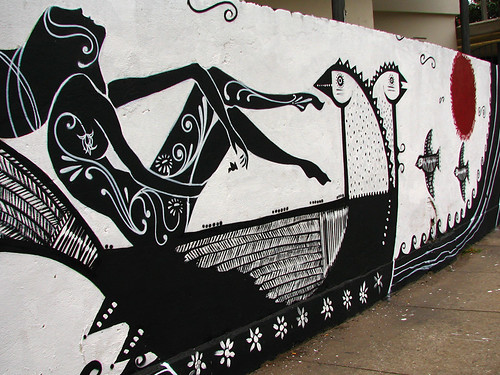
I have never delved much into the world of street art and graffiti. In fact, I have felt partially against graffiti due to my limited exposure to it - often it being gang tagging or very crude and inappropriate for the setting.

Jana Joana has been working in Sao Paulo, Brazil since 1998.
"I like working on feminineness in my drawings and the sensitivity that every woman has, and I seek the valorization of women as singular productive and creative human beings in society," says Jana Joana.

Saturday, January 30, 2010
Conditioning and Schedules of Reinforcement
Different types of conditioning and using the movie Rain Man for examples.
Operant conditioning creates a thinking response.
examples:
examples:
examples (not from Rain Man):
fixed ratio: certainty of reward for a patter or behavior
Operant conditioning creates a thinking response.
examples:
- Charlie takes maple syrup to the diner each time for breakfast, or else Raymond would throw a fit.
- Charlie buys Raymond a portable television, so Raymond won't miss his shows.
examples:
- Raymond brushes his teeth a certain amount of times each morning.
- Raymond gets to watch TV after he does his routine.
- Charlie repeats things like an autistic person would. He learns this from Raymond from when they were kids. An example is when Charlie repeatedly says, "I got the rose bush!"
- Raymond tries to dance after seeing the people dance on TV.
- Raymond mimmicks Susana's moans.
- Raymond copies the motor sounds of the car on the bridge.
examples (not from Rain Man):
- Susie had a great time at Disneyland. When Susie thinks of Disney related things, she becomes happy.
fixed ratio: certainty of reward for a patter or behavior
- Each time the student studies, the student gets an A.
- Each time the player makes a goal, the student receives a high-five.
- Every night at 6pm, he eats dinner.
- Every Friday night, she gets to go out.
- She doesn't know how many times a week she had to do the dishes to get an allowance.
- The child's parents sometimes give him a cookie after he recites the ABCs.
- The fisherman doesn't know for how much time he has to wait until a fish comes along and takes the bait.
Peak Performers
... are on a mission.
... are masters of core competencies; give and take information.
... are masters of goal setting. They don't care about the reward, they work on things that they don't like if necessary in order to be better at what they're doing.
... commit to goals.
... treat failure as feedback.
... work collaboratively.
... maintain a network of friends, family, and colleagues.
... maintain a healthy lifestyle of exercise and nutrition.
... are not workaholics, they take regular vacations.
... exceed cultural and physical limits.
... use mental imagery. They imagine the goal and struggle.
... are masters of core competencies; give and take information.
... are masters of goal setting. They don't care about the reward, they work on things that they don't like if necessary in order to be better at what they're doing.
... commit to goals.
... treat failure as feedback.
... work collaboratively.
... maintain a network of friends, family, and colleagues.
... maintain a healthy lifestyle of exercise and nutrition.
... are not workaholics, they take regular vacations.
... exceed cultural and physical limits.
... use mental imagery. They imagine the goal and struggle.
Subscribe to:
Posts (Atom)